
Can You Paint Microcement? This Month’s Top Questions
From “can you paint over microcement?” to “can you use microcement in bathrooms?”, let’s get into this month’s top microcement questions. With 25+ years of experience as microcement installers, who better to answer them than Alt Surfaces?
Looking for microcement in Australia? Discover X-Bond Microcement.
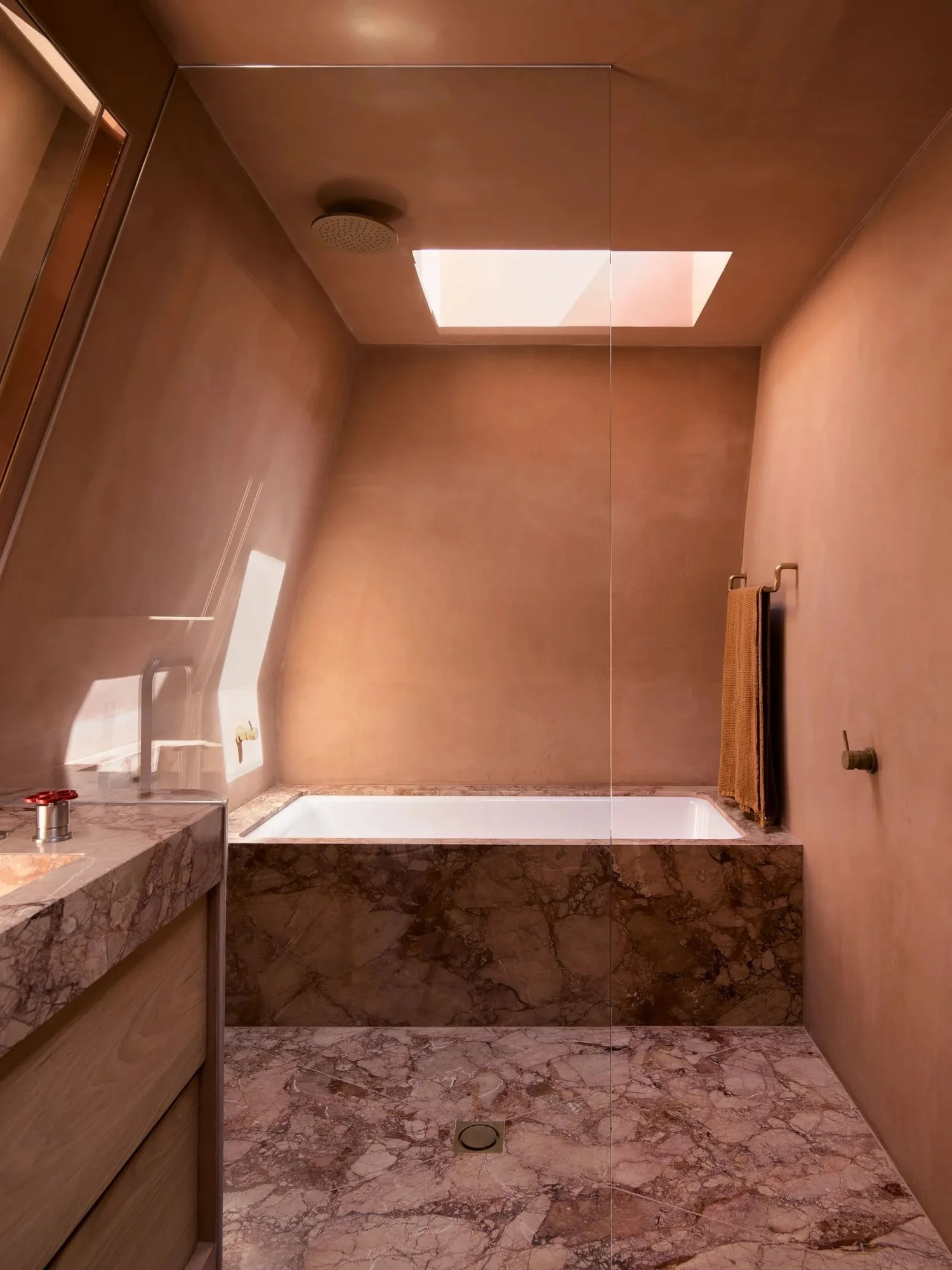
Can You Paint Microcement?
You shouldn’t. Microcement is designed to be a decorative finish, not a base surface to paint over. Colour is pigmented directly into the microcement during application, rather than being applied after it cures.
Painting over microcement can not only compromise its natural aesthetic and mask the subtle textural movement created during hand trowelling — but more importantly, it can also affect the performance of the system itself. Microcement needs to be sealed for protection against water, stains and wear. Applying paint over the protective sealers can interfere with both the durability of the sealer and the paint.
If you want to change the colour of your microcement, it’s recommended that a fresh microcement coating is installed on top in the new colour of your choice, which brings us to the next question…
Can You Change the Colour of Existing Microcement?
Yes — but through resurfacing rather than painting. A new layer of microcement can be applied over the existing finish, allowing you to completely change the colour (and even the texture) without demolition.
This is one of the major advantages of decorative concrete coatings in modern renovations. Resurfacing does involve some prep work to ensure a lasting bond to the old substrate, which you can read more about in Our Microcement Resurfacing Hub.
Popular 2026 microcement colours include warm off-whites, clay tones, and soft olive greens. Explore all these and more in our new X-Bond Hybrid range.
Can Microcement Crack Over Tiles?
This remains one of the biggest Google searches around microcement flooring and bathrooms. The short answer: properly installed microcement should not crack even when it’s applied over tiles. Tile resurfacing is one of the most common microcement applications for our team and has many benefits, when done correctly.
Cracking in microcement occurs because of:
Substrate movement
Structural instability
Poor preparation
Incorrect mesh reinforcement
Low-quality products
Inexperienced installation
Professional systems use a combination of reinforcement mesh, flexible formulas, membranes and specialised base coats to bridge tile joints and minimise movement transfer.
This is why substrate preparation is arguably the most important part of any microcement installation. Read More: Surfaces Microcement Should NOT Be Applied Over
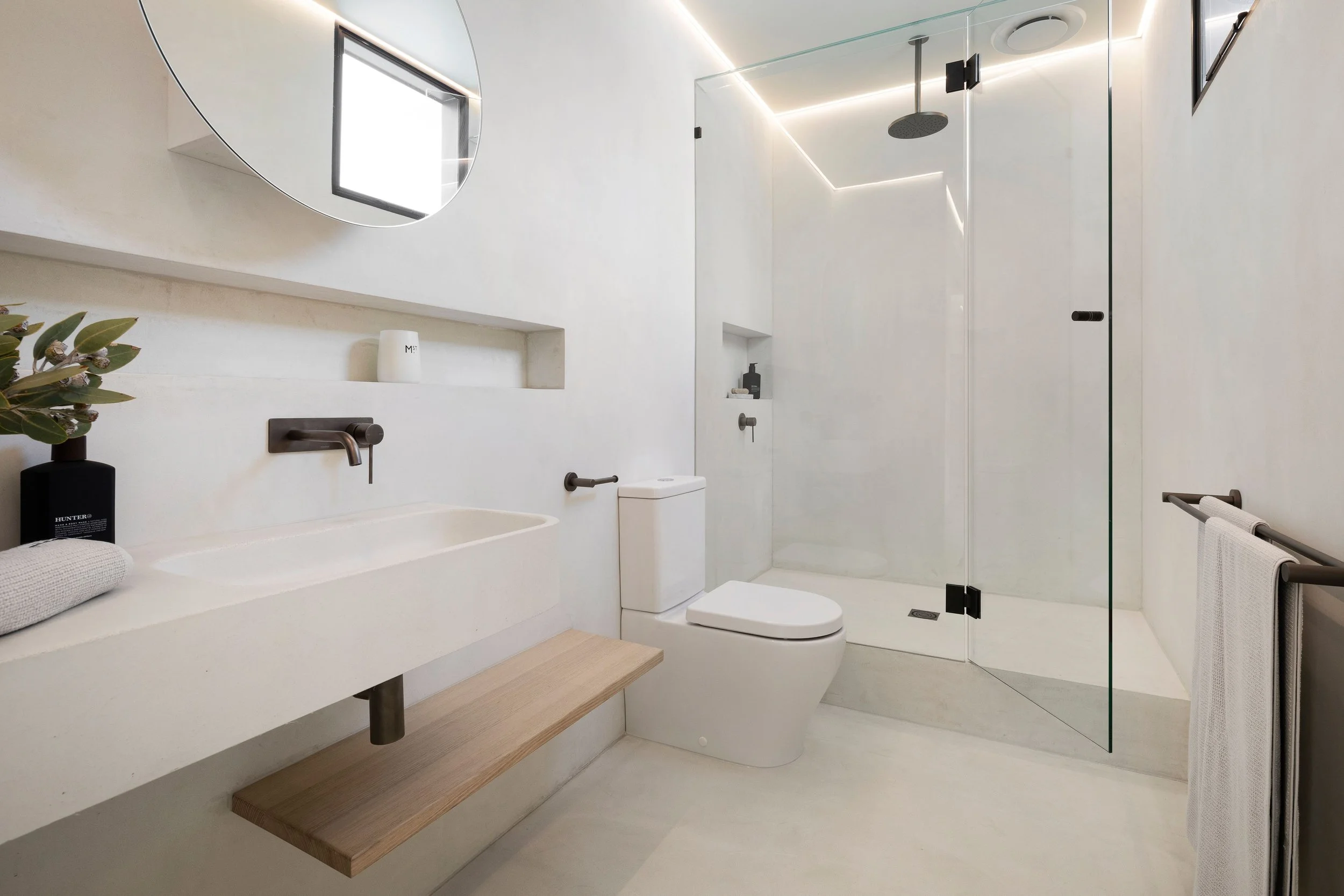
Is Microcement Waterproof?
Microcement itself is not inherently waterproof — the waterproofing comes from the full system. In wet areas like showers and bathrooms, waterproof membranes and protective sealers are essential.
The X-Bond system is CodeMark certified, meaning the Australian Building Codes Board has proven its deemed-to-satisfy compliance with key performance standards in waterproofing.
We’ve installed X-Bond Microcement to create seamless, water-resistant surfaces in:
Bathrooms and showers
Laundry areas
Kitchen splashbacks
Exterior spaces exposed to rain
Commercial hospitality spaces
One of the biggest benefits is the absence of grout lines, which reduces mould build-up and simplifies cleaning.
Can Microcement Be Used Outdoors?
Yes, microcement can be applied on outdoor surfaces. We have more insights in our article Microcement for Outdoor Spaces — but in summary, to be suitable for exterior use microcement systems require:
UV stability
Thermal flexibility
Weather-resistant sealers
Proper drainage considerations
Slip resistance
When the above are addressed, microcement is perfect for alfresco areas, pool surrounds, facades and landscaping.
Is Microcement Slippery?
It depends on the finish. Highly smooth finishes can become slippery when wet, but professional installers can incorporate textured finishes (like X-Bond Blade) or anti-slip additives for safer performance.
This is especially important for bathroom floors, pool areas, commercial venues and entryways. With decades of trust in residential and commercial projects, X-Bond Microcement can achieve compliant slip ratings while still maintaining a refined minimalist appearance.

Does Microcement Stain Easily?
Quality microcement systems are highly stain resistant once sealed properly. However, like natural stone or concrete, performance depends heavily on:
The sealer used
Maintenance practices
Exposure to acids and oils
In kitchens, it’s still recommended to wipe spills quickly — especially wine, coffee, citrus, or oils. Learn more about microcement maintenance.
How Long Does Microcement Last?
Professionally installed microcement can last well over 15–20 years with proper maintenance. Durability depends on the quality of the product and installation, as well as traffic levels and ongoing maintenance.
Because of their outstanding durability, commercial-grade microcement systems like X-Bond are now commonly used in high-traffic zones like retail stores, restaurants, hotels, offices, and flooring in homes.
Is Microcement Still Popular in 2026?
More than ever. Aside from being the easiest way to undertake a no-demolition renovation, microcement also aligns perfectly with major 2026 design trends . A shift toward seamless surfaces, natural textures, and minimalist architecture continues to drive demand globally.
Architects and designers also increasingly favour microcement because it delivers the raw elegance of concrete without the thickness, weight, or demolition associated with traditional concrete construction.
Related Reading:

As microcement continues growing in popularity across residential and commercial design, understanding the correct installation and maintenance practices becomes increasingly important.
Whether you're researching microcement over tiles, waterproof microcement bathrooms, or low-maintenance seamless flooring, choosing a high-quality system and experienced installer makes all the difference.
Because every project is different, suitability ultimately depends on substrate condition, environmental exposure, application area, and the specific microcement system being used.