
How Microcement Supports Biophilic Design
It’s one of the most influential movements in contemporary architecture and interior design, yet it’s still a term many people have never heard of: biophilic design.
Focused on strengthening the connection between people and nature, biophilic spaces are designed to improve wellbeing, reduce stress, and create environments that feel calm, balanced, and restorative.
While lush greenery and timber finishes are often associated with biophilic design, microcement has emerged as a versatile surface solution that aligns perfectly with this approach. Its organic textures, seamless appearance, and compatibility with natural palettes make it an ideal material for creating nature-inspired interiors.
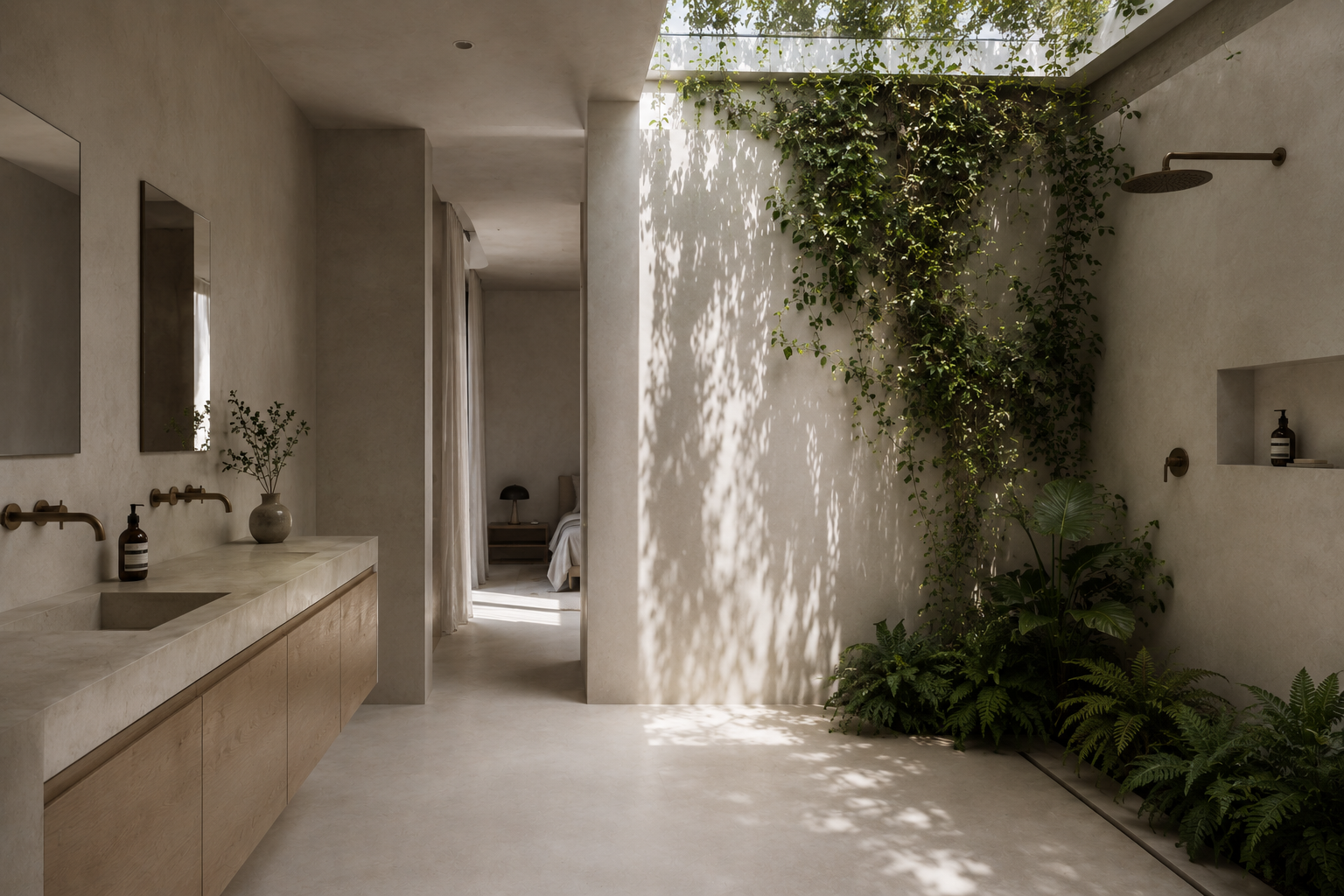
What Is Biophilic Design?
Biophilic design is the practice of incorporating natural elements, textures, colours, and forms into built environments. It’s based on the idea that spending time in spaces connected to the outdoors can enhance human comfort and wellbeing.
Common biophilic design principles include:
Natural materials and finishes
Organic textures and forms
Neutral, earthy colour palettes
Increased light and openness
Seamless indoor-outdoor transitions
Calm, uncluttered environments
Originally popular in wellness, hospitality, and other commercial architecture projects, biophilic design is now widely used in residential interiors as homeowners seek spaces that feel more grounded and calming.
Related Reading:
The Rise of Microcement Interiors
Why Microcement Works So Well in Biophilic Spaces
Microcement naturally complements biophilic design because of its tactile finish, minimal aesthetic, and adaptability across a wide range of surfaces.
Unlike heavily patterned or artificial-looking finishes, microcement creates a soft, continuous texture that feels understated and organic. Its handcrafted application means every surface has subtle tonal movement and variation, adding depth without visual clutter.
The result is a space that feels calm, cohesive, and connected to natural materials.
Seamless Surfaces Create Visual Calm
One of the key goals of biophilic design is reducing visual noise. Clean lines and uninterrupted surfaces help create a sense of openness and tranquillity.
Microcement is applied seamlessly across floors, walls, ceilings and joinery without grout lines or visible joins. This continuity creates a softer and more harmonious environment, particularly in open-plan spaces. You can use the same finish across bathrooms, kitchens, flooring, and exterior spaces.
The seamless finish also allows natural light to flow more evenly throughout the room, helping interiors feel brighter and more expansive.
Earthy Colours and Natural Textures
Biophilic interiors often rely on muted, nature-inspired tones such as sand, clay, stone, olive, taupe, and warm grey.
Different brands offer different ranges; our product X-Bond Microcement is available in a wide range of custom colours and textures. Whether you want a sleek plaster-esque finish or the raw concrete look, microcement can be tailored to suit the overall design direction.
Its subtle movement and mineral-like appearance help create spaces that feel grounded and authentic rather than overly polished or synthetic.
Supports Indoor-Outdoor Flow
Creating a strong connection between indoor and outdoor environments is a core principle of biophilic design. While plants and greenery play an important role, material selection is equally important in creating this sense of connection.
Because microcement can be applied across multiple surfaces and areas, it helps achieve a continuous visual flow from inside to outside. Using the same finish across interior spaces and alfresco areas creates cohesion and strengthens the relationship between architecture and landscape.
This seamless transition is especially effective in modern homes with large openings, courtyards, or outdoor entertaining spaces.
Ideal for Wellness-Focused Bathrooms
Bathrooms are one of the most popular spaces for biophilic design. Homeowners increasingly want bathrooms that feel spa-like and calming.
Microcement is particularly well suited to bathroom environments because it combines warm, tactile, and restorative aesthetics with outstanding performance — a seamless, waterproof finish suitable everywhere from showers to bathroom floors and even sink basins.
A Minimalist Material With Warmth
Minimalist interiors can sometimes feel cold or overly sterile when hard materials dominate the space. Microcement offers a softer, and therefore more organic-feeling alternative.
Its hand-finished texture adds warmth and depth while maintaining the clean simplicity that contemporary interiors demand. This balance makes it ideal for modern biophilic spaces where restraint and comfort need to coexist.
Suitable for Residential and Commercial Design
Biophilic design is increasingly used across residential homes, hospitality venues, wellness studios, retail spaces, and commercial environments.
Microcement’s durability and versatility make it suitable for all of these applications. It performs well in high-traffic environments while still delivering the natural, calming aesthetic associated with biophilic interiors.
From boutique hotels and retail experiences to modern family homes, microcement helps create spaces that feel intentional, welcoming, and connected to the environment.
A Sustainable Renovation Approach
Biophilic design often overlaps with sustainability-focused architecture and renovation practices.
Microcement supports this approach because it can be applied directly over existing substrates such as tiles or concrete, reducing demolition waste and material consumption. Its thin application system also minimises the need for bulky construction materials.
Combined with its long lifespan and timeless appearance, microcement offers a practical surface solution for environmentally conscious projects.
Bringing Nature and Architecture Together
Biophilic design is ultimately about creating environments that feel healthier, calmer, and more human-centred. Microcement supports this philosophy through its organic appearance, seamless application, and compatibility with natural materials and palettes.
Whether used in bathrooms, kitchens, commercial interiors, or entire homes, microcement helps create spaces that feel connected, refined, and timeless.
As more designers and homeowners embrace nature-inspired interiors, microcement continues to stand out as one of the most versatile finishes for achieving a modern biophilic aesthetic.