
Three Seamless Alternatives to Tiles for Bathrooms
The modern bathroom surfaces going beyond grout lines.
Tiles are a go-to surface for bathrooms, and while we do love them (we even listed them as one of the standout material trends in 2025), they’re not your only option.
Before you choose your bathroom finishes, read about the three tactile, low-maintenance, and minimalist design-forward alternatives designed to elevate both form and function — including our top pick for one of the most versatile solutions: microcement (X-Bond).
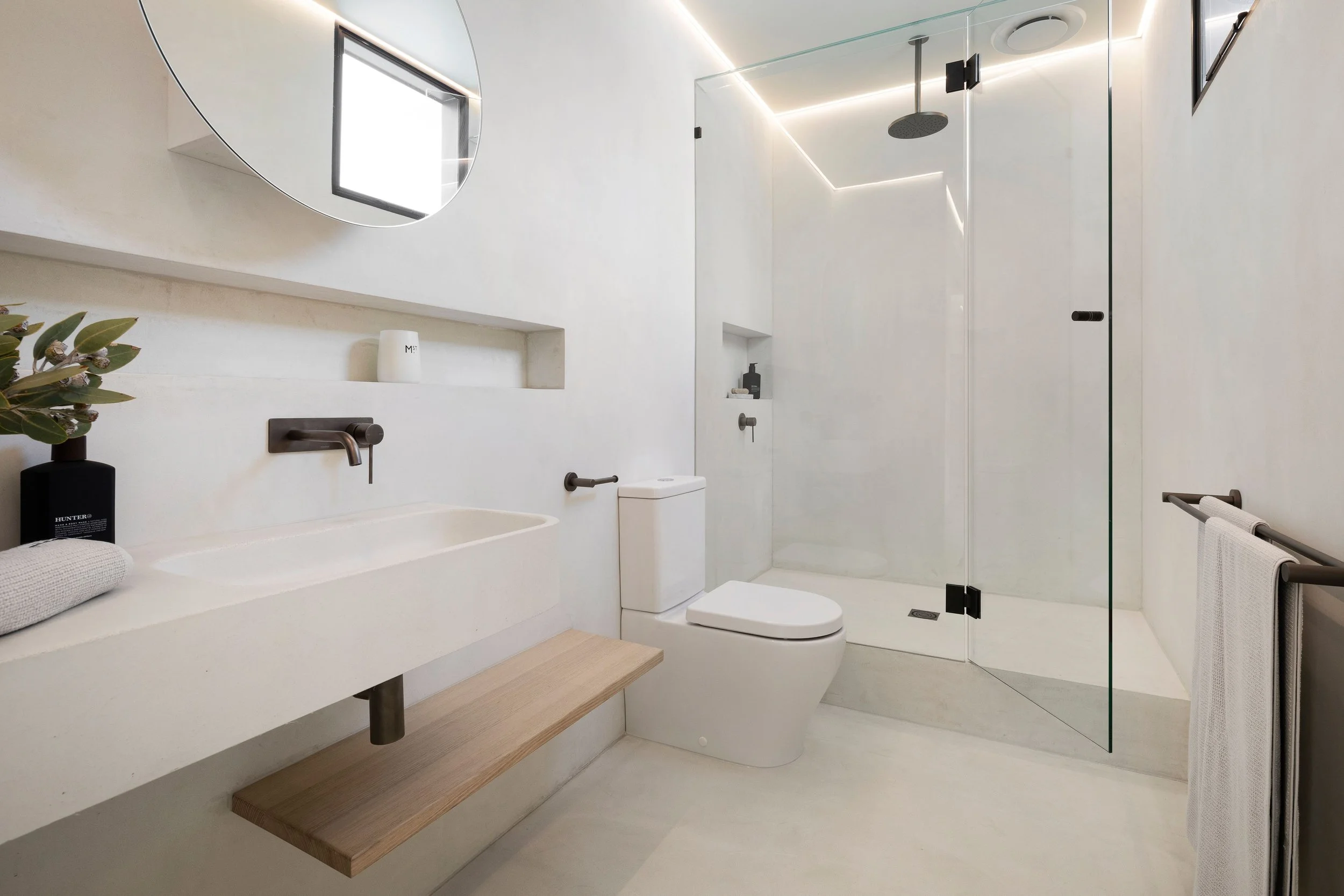
Why Look Beyond Tiles?
While tiles are a familiar choice that performs well in wet environments, they can come with limitations:
Grout lines can stain, crack, or accumulate mould — requiring ongoing maintenance
Installation can be time-consuming and labour-intensive — especially for remodels
Visual continuity is often interrupted by joints and edges — less minimal design
As modern bathroom design shifts toward seamless finishes, material continuity, and minimalism, that’s where these alternative surfaces excel.
1. Microcement (X-Bond) — Modern Formula Innovation
If you’re looking for a high-end contemporary finish, microcement is one of the most advanced alternatives to tiles.
What is X-Bond Microcement?
X-Bond is our speciality finish. It’s a polymer-modified natural stone overlay system hand-applied in thin layers (just 2–3mm) over existing surfaces with little to no weight or structural limitations. Engineered for durability, the stone makes it a stronger and more resilient system than standard plaster, while the polymers achieve adhesion to a wide range of substrates as well as flexibility to resist cracking.
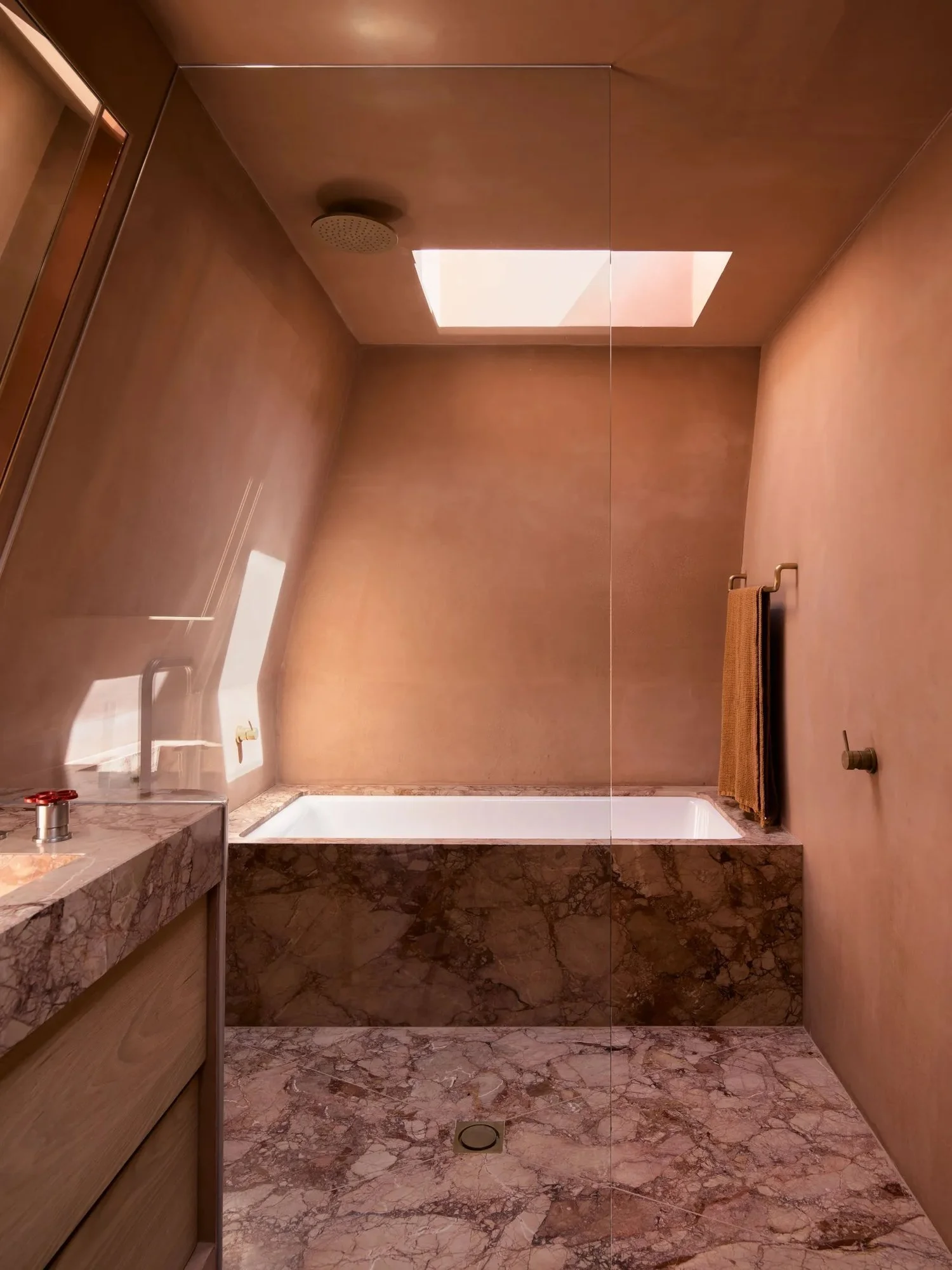
While not every microcement is waterproof, X-Bond include waterproofing membranes and sealers as part of the system. This makes it suitable for all bathroom surfaces from flooring to shower walls, vanities, splashbacks, and even bathtubs!
Learn more at our X-Bond product page.
Why Choose X-Bond Microcement for Bathrooms?
Seamless & Minimalist
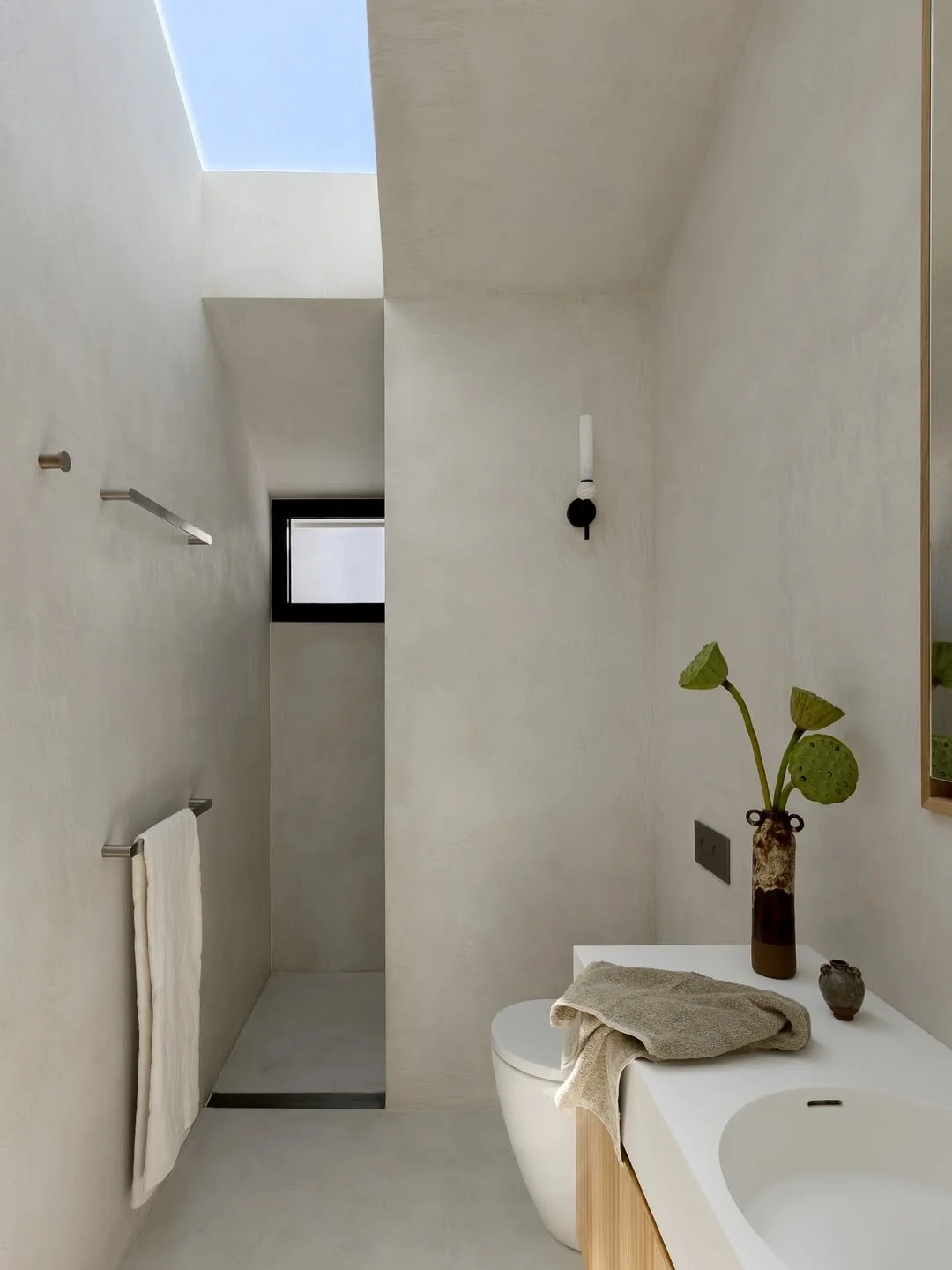
Microcement creates a continuous, joint-free finish with subtle texture. No grout lines means a clean, uninterrupted aesthetic — but the tactility of visible trowel markings creates dimension and depth.
Can Be Applied Over Existing Tiles
X-Bond can be installed directly over old tiles without needing demolition, reducing cost, labour, and construction time in renovations.
Here’s an article that goes further into the process of tile resurfacing with microcement.
Waterproof & Compliant
When installed as a complete system, X-Bond is CodeMark certified, meaning it automatically meets Australian building standards for waterproofing and performance.
Versatile Across All Surfaces
Walls, floors, vanities, ceilings, and even showers can all be finished in the same material for total design cohesion.
Durable & Low Maintenance
Highly resistant to wear, stains, and impact due to a specialised sealing system — ideal for high-use wet areas. Easy to clean with water and mild detergents.
Design Freedom
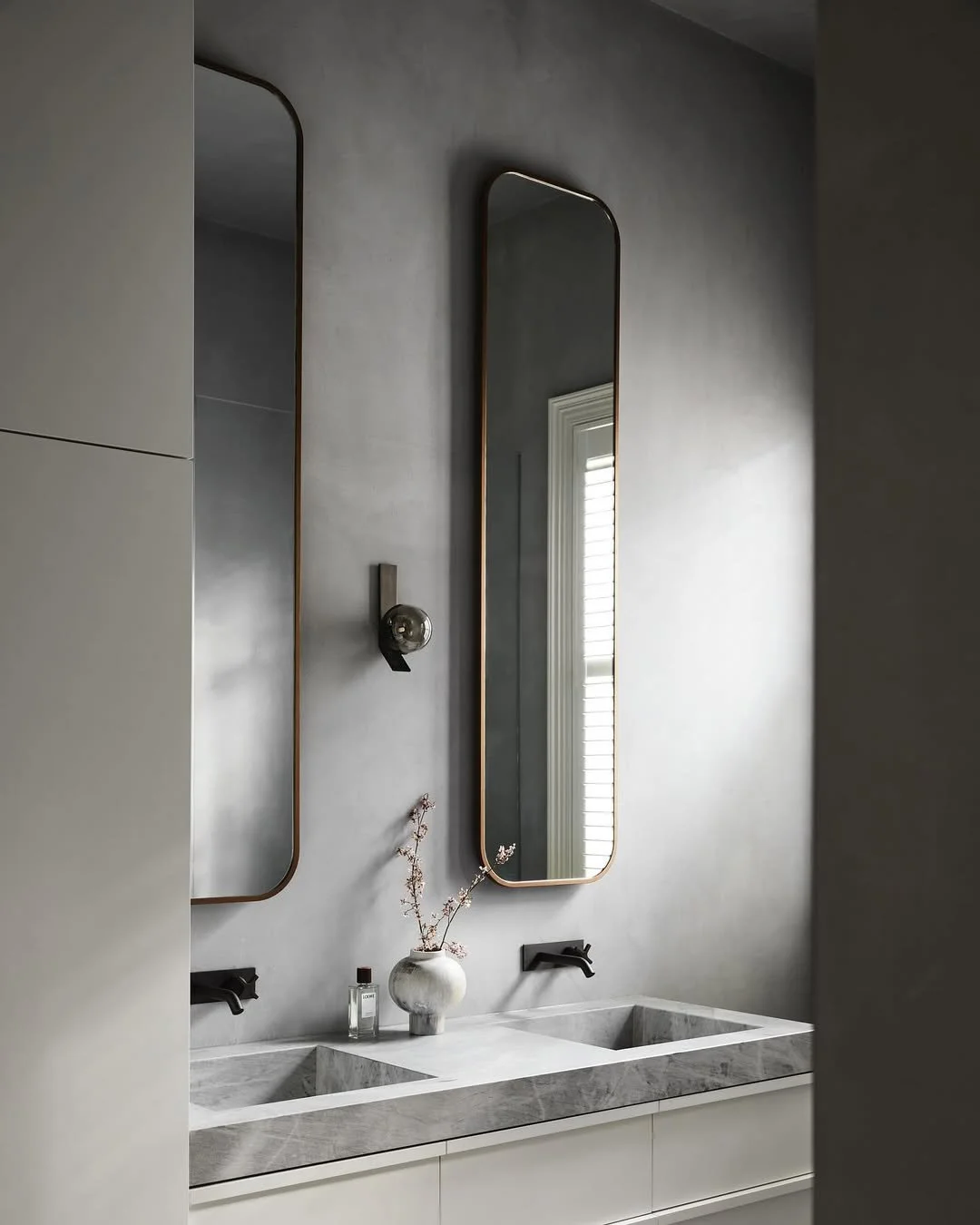
Available in a wide range of colours.
Read More:The Alt. Guide to Microcement Bathrooms
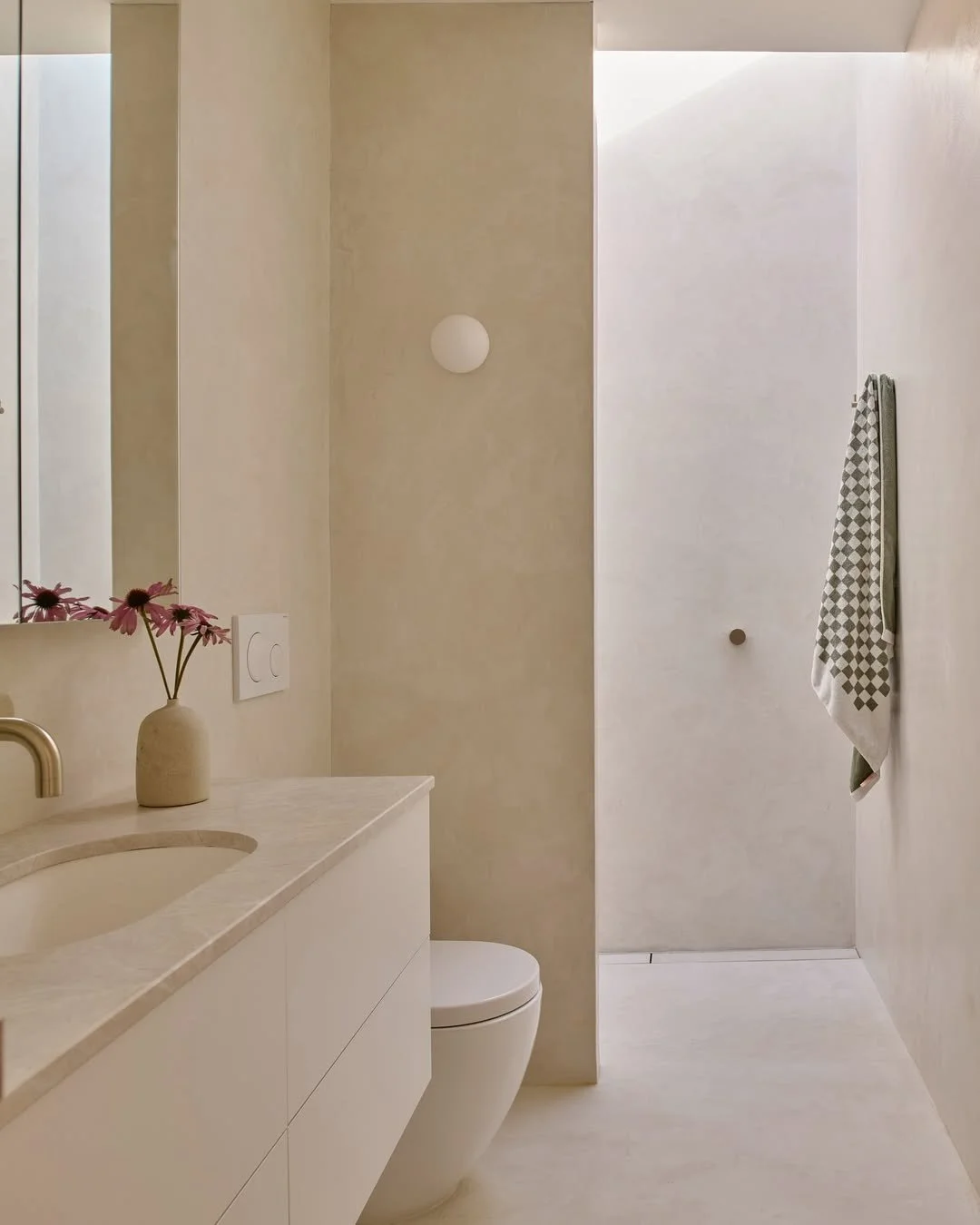
2. Tadelakt — Traditional Lime Finish
Tadelakt is a traditional Moroccan lime plaster known for its soft, organic appearance and subtle movement. It’s often used to create a seamless, spa-like feel but is generally better suited to feature walls or low-use areas rather than full bathrooms.
Composition:
Hydraulic lime (lime + natural clay impurities)
Fine sand or marble dust (sometimes)
Water
Finished with olive oil soap
Key characteristics:
Thickness: typically 5–10 mm
Burnished by hand with a stone
Chemical reaction between lime + soap → inherently water-resistant surface
Performance:
Durability: Moderate–high (but softer than microcement)
Crack resistance: Low–moderate (rigid, no polymers)
Water resistance: Good
Breathability: Excellent
Summary: Tadelakt is natural, breathable, and softer, but more fragile and technique-dependent.
Pros:
Seamless, grout-free finish
Soft, natural texture with tonal variation
Ideal for curved surfaces and niches
Creates a warm, organic aesthetic
Cons:
Limited durability in high-use or high-traffic areas
Ongoing maintenance is typically required to preserve the finish
Can be sensitive to cleaning products and wear over time
Not always suitable for floors or full wet zones
3. Venetian Plaster — Decorative Marmorino/Stucco
Venetian plaster is a decorative finish made from lime and marble dust, designed to create depth and movement with a sleek hand feel.
Composition:
Slaked lime (lime putty)
Marble dust (very fine)
Water
Sometimes modern versions include acrylic additives
Key characteristics:
Thickness: ~1–3 mm
Highly polished decorative finish
Carbonates over time (absorbs CO₂ → becomes stone-like)
Performance:
Durability: Moderate
Crack resistance: Low (unless modified)
Water resistance: Low–moderate (high when sealed)
Breathability: Excellent
Summary: Venetian plaster is not structural or heavy-duty, but it is reasonably durable for decorative surfaces.
Pros:
Seamless appearance with a refined, polished look
Wide range of colours and finishes
Adds depth and visual texture to walls
Suitable for feature areas and statement surfaces
Cons:
Primarily suited to walls, not floors or full wet areas
Less durable than more robust surface systems like microcement
Can show wear or marking over time in high-use spaces
Venetian plaster works well as a decorative element, but it’s not typically used as a full-surface solution in bathrooms. For areas exposed to regular water and wear, additional materials or systems are often required.
Read More:The Difference Between Microcement and Venetian Plaster
Seamless bathroom finishes are redefining what’s possible in modern design. By removing grout lines and creating continuous surfaces, materials like microcement, Tadelakt, and Venetian plaster offer a refined, architectural aesthetic.
For those looking to achieve a fully seamless, hard-wearing, and practical bathroom, it’s important to consider how each material performs in real-world conditions — not just how it looks.
Like any finish, installation quality varies depending on applicator skill and the formulation of individual product systems.
Choosing the right surface ultimately comes down to balancing design intent, durability, and long-term maintenance ensuring your bathroom not only looks good on day one, but continues to perform over time.
Related Reading: Alternative Seamless Flooring Options