
What's the Difference Between Microcement and Venetian Plaster?
Updated November 2025
We’ve been in the game for over 25 years, and during that time one we’ve tried all different products. Microcement is the one finish that remains a clear winner for designers, architects, builders and home owners alike.
Microcement and Venetian plaster are both popular alternatives to traditional surface materials. While there are some similarities between the two, each finish has unique characteristics to take into consideration when choosing which one is best for your project.
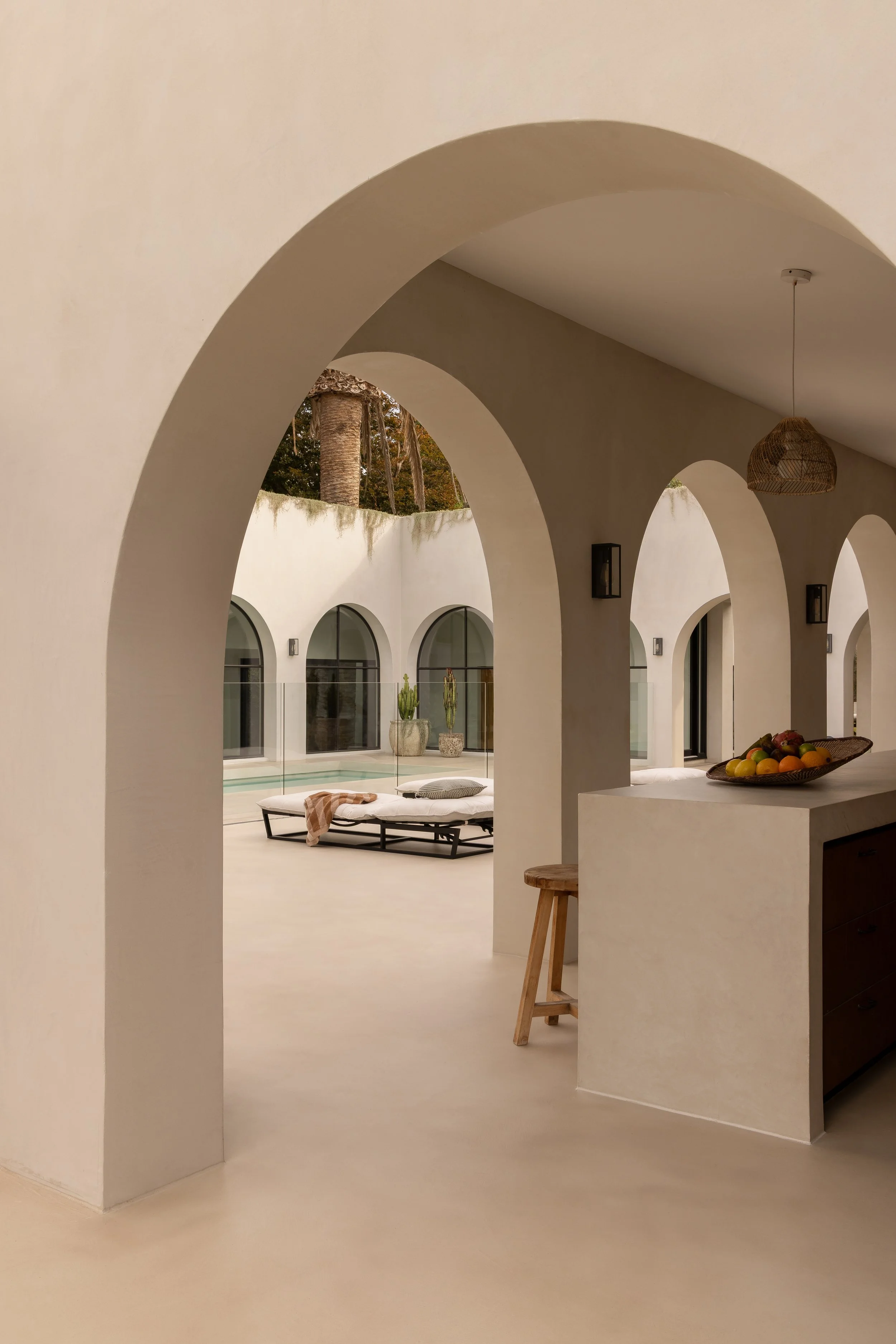
Microcement is a cement-based coating that's known for its durability, versatility, and beautiful seamless finish. It’s a newer innovation in the surfacing industry; we were the first Australian microcement installers in 1999 (read our story here). It’s a good choice for creating a concrete look and feel, but with a lightweight construction and more widespread functionality. It’s suitable for a variety of surfaces: floors, walls, ceilings, and furniture in both internal and external spaces, including wet areas.

Venetian plaster is a lime-based plaster with a rich history that dates back to Roman times. Venetian plaster is known for a finish that can give the appearance of marble or stone, but it can also be customised for a more subtle texture (very similar to microcement) in a very wide range of colours. It's applied only to walls or ceilings and best suited for indoor settings.


Similarities between microcement and Venetian plaster
Microcement and Venetian plaster are both considered luxury, high-end finishes. In terms of aesthetics, they can appear very similar. The finished surface provides a more textured and dynamic result than standard paint and plaster — with visible trowel marks and tonal variation. There are opportunities to customise the colour and texture of both microcement and Venetian plaster surfaces. Application technique is also quite similar, as both are applied by hand in thin layers.
Read More: Common Myths About Microcement, Busted
Differences between microcement and Venetian plaster
Costs: Pricing for hand-rendered finishes always depends on project dimensions, area of installation, and substrate. When you compare the cost of installation for microcement and Venetian plaster, there are savings to be found with both. Resurfacing tiles, for example, is a more cost-effective exercise with microcement as it can be installed straight over the top. In other cases, such as a small feature wall, it might be cheaper to specify Venetian plaster (or even DIY the installation).
Durability: While both are decorative coatings, microcement is stronger as it’s made with cement/stone. This means microcement can be applied to high-traffic flooring while Venetian plaster is only rendered on walls.
Applications: You can apply Venetian plaster over porous substrates such as prepared plasterboard, brick, cement board, and concrete. Microcement can be installed over almost any existing hard material, including tiles.
DIY: Some companies sell DIY microcement kits, but most microcement suppliers only supply to trained renderers as it can be difficult to execute correctly without specialised knowledge — especially if it’s installed in high-traffic areas, on intricate/complex shapes, damaged substrates, or needs waterproofing. Venetian plaster is more suitable for home owners taking on DIY projects, as it’s only applied to flat walls or ceilings.
Outdoor Areas: Venetian plaster is not recommended in external environments, while microcement is durable enough to hold up in all climates and conditions.
Waterproofing: When applied indoors, both materials are sealed to created a wipeable, water repellant surface; but only microcement can be fully waterproofed and installed in wet areas like showers, pools, and sinks. Discover More: Microcement Bathrooms
Design: Both microcement and Venetian plaster can be customised in colour and texture, but Venetian plaster typically has a wider range of colour possibilities.
Interested in microcement installation? We’re booking jobs for 2026 now.
Related Reading: Microcement vs. Concrete: What’s the Difference?





-
For both plaster and cement products, improper application and lack of substrate preparation are the biggest risks to cracking, particularly in older homes or high-traffic areas. That’s why it’s important to either engage a professional who makes a thorough assessment of your substrate (or ensure you’ve done so correctly following all product guidelines if installing it yourself).
-
Microcement is often grouped with other renders, such as tadelakt, Marmorino, and of course Venetian Plaster. All of these products can be similar in aesthetic appeal — smooth, seamless, and tactile.
Microcement, however, differs in its composition and performance. It’s far more durable and versatile than traditional lime plasters. It can be applied over a variety of substrates — from concrete and tiles to plasterboard — and used seamlessly across floors, walls, and joinery. The result is a modern, monolithic surface that retains the handcrafted feel of its decorative plaster counterparts, but with enhanced strength and practicality.