How a Microcement Installer Creates Seamless Surfaces
The Secret to Rendering Interior Wall Finishes & Microcement Flooring
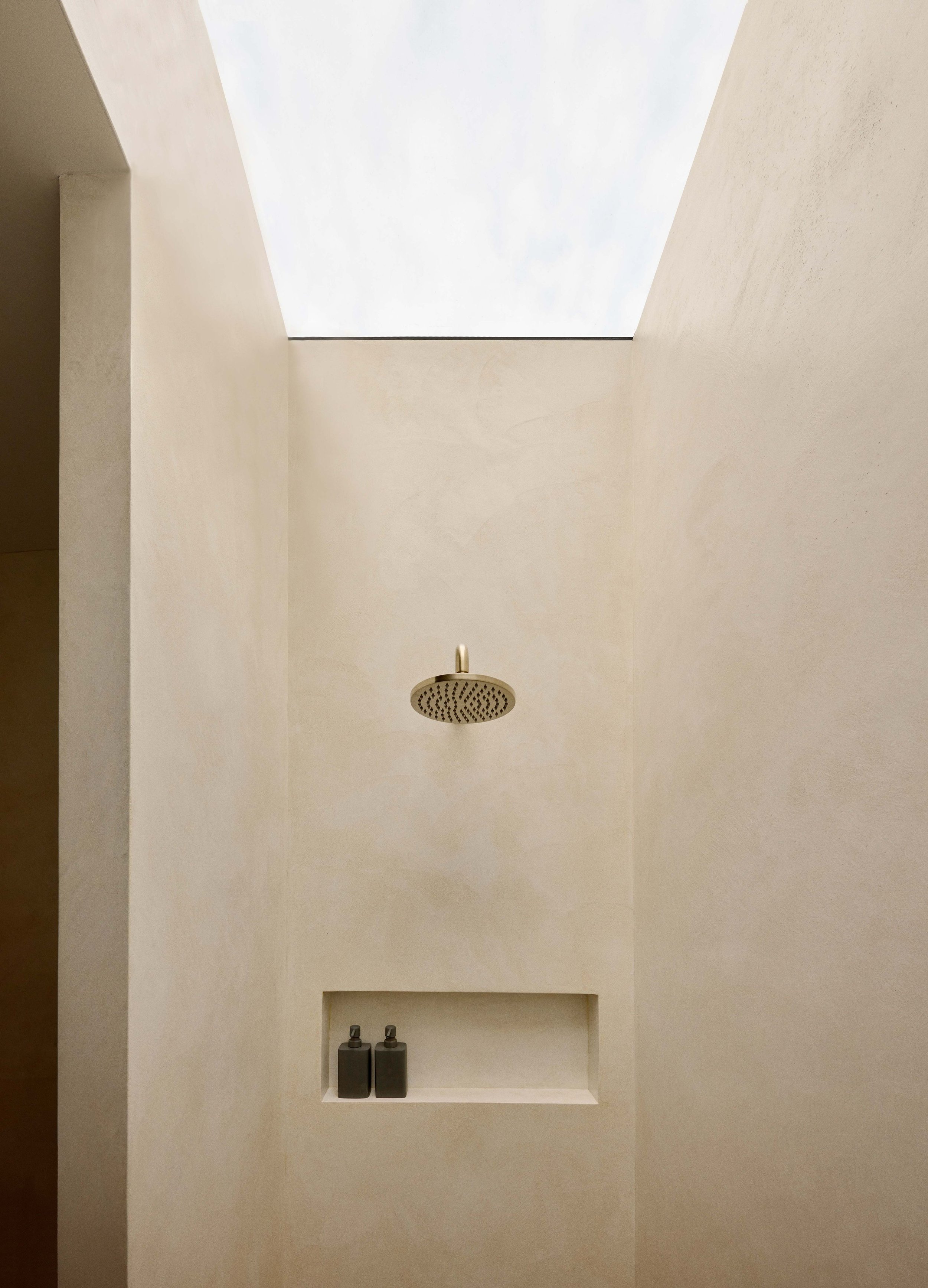
Seamless, textural renders have become a defining feature of contemporary architecture — finishes like Venetian plaster, microcement and tadelakt are everywhere from high-end homes to award-winning retail and hospitality designs.
As specialist X-Bond Microcement installers, we know that achieving a durable, beautifully rendered result is a multi-step process where preparation and technique determine the final quality.
When done correctly, the outcome is a refined finish delivering high performance alongside architectural simplicity.
Here‘s how we seperate professional microcement work from generic decorative coatings.
Related Reading:
The Biggest Microcement Application Mistakes
Why Choose Alt. Surfaces Microcement Installers
Comprehensive Surface Preparation
The foundation of any successful microcement installation is the condition of the substrate. Even the highest-quality materials cannot compensate for a poorly prepared surface.
Our installers begin by thoroughly assessing the existing substrate. Whether the microcement is being applied to plasterboard, concrete, cement board, tiles, or screed, the surface must be stable, clean, and structurally sound.
Preparation typically includes:
Cleaning the substrate
Repairing cracks or imperfections
Ensuring proper levelling
For microcement flooring, particular attention is given to structural stability. Floors must withstand continuous foot traffic, so the substrate must be rigid and properly bonded before application begins.
This stage ensures that the final seamless surface remains durable and resistant to cracking over time.
Waterproofing and/or Reinforcement
Before the microcement system is built up, there are two critical performance factors to address: moisture management and structural stability. Depending on the location of the installation, this stage may involve waterproofing, reinforcement, or a combination of both.
In areas exposed to water — such as bathrooms, wet rooms, laundry spaces, or kitchen splash zones — we apply a dedicated liquid waterproof membrane before the base coats begin. This membrane forms a continuous barrier beneath the microcement, and acts as primary waterproofing.
Where moisture exposure is less of a concern, the focus shifts more toward reinforcement. Certain applications may require a reinforcement mesh before the first base layer of microcement. This mesh distributes tension across the surface and helps minimise the risk of hairline cracking caused by minor structural movement in the building.
Reinforcement becomes especially important when creating large seamless surfaces, where continuous areas span multiple metres without expansion joints. By stabilising the system early in the application process, installers ensure that the finished render maintains both its durability and visual consistency.


Precision Application
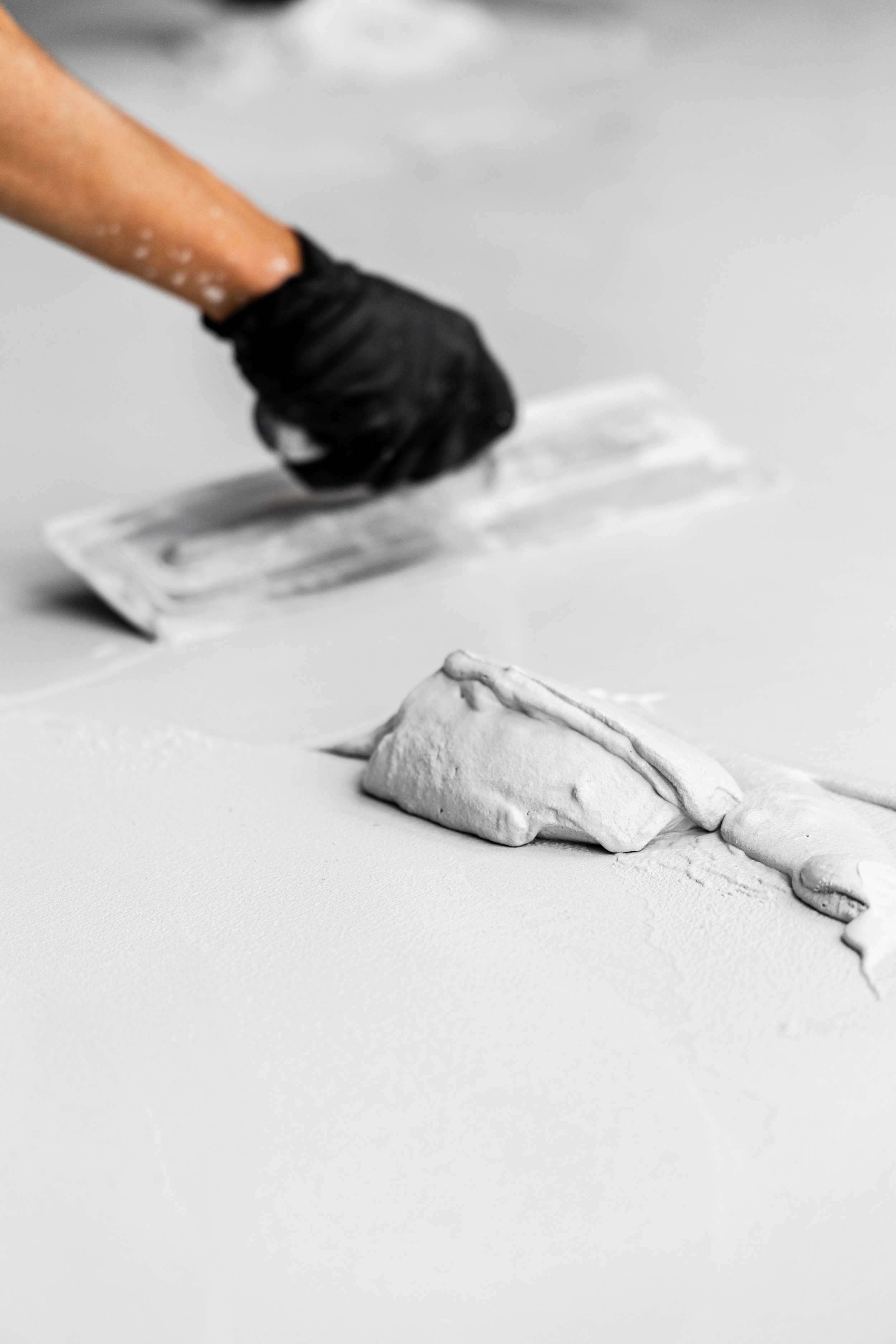
Microcement is not applied in a single coat. Instead, we build the X-Bond system through two even layers applied by hand.
Our technique during this phase changes depending on the texture specified, but regardless of the chosen finish we’ll always ensure even thickness across the surface and full curing between layers.
Sealing and Protecting
Sealers protect microcement from moisture, stains, and abrasion while enhancing the visual depth.
This protective layer is essential wherever you’re applying it, but particularly in high-use areas such as kitchens, bathrooms, exteriors, and living spaces.
Sealing provides several important benefits:
Water and weather resistance
Improved durability
Stain protection
Easier cleaning and maintenance
The sealer also helps the colour develop — our samples are all based off a final sealed surface — and enhances the natural variation of the texture.