Design Ideas for Small Outdoor Areas That Make a Big Impact
A small outdoor area doesn't have to feel limiting. In fact, with the right design decisions, even the most compact courtyard, patio or balcony can feel spacious, functional and beautifully considered.
The secret is choosing elements that create a sense of openness, continuity and indulgence without wasting space. Simple decisions like using seamless flooring materials and planting vertically can dramatically change how an area feels — regardless of its size.
Whether you're refreshing a tiny courtyard or reimagining a balcony for entertaining, these ideas will help you maximise every square metre.
Related Reading: Microcement for Exteriors
1. Use One Seamless Flooring Material
One of the simplest ways to make a small outdoor area appear larger is to reduce visual interruptions with seamless flooring.
Rather than combining multiple paving styles, borders, or transitions, carry a single flooring material throughout the space. This allows the eye to travel uninterrupted and creates the illusion of a much larger footprint.
Materials like microcement or resin-bound stone carpet — which are applied by hand as a continuous surface coating — work particularly well because they’re totally seamless, eliminating the visual breaks created by grout joints or individual pavers.
The benefits of these flooring materials doesn’t end there: they’re incredibly low-maintenance, durable, and can be applied over old surfaces without needing demolition. Stone aggregates also come in permeable options, offering excellent outdoor floor drainage.
Read More: The Best Surfaces for Outdoor Flooring
2. Build Seating Into the Architecture
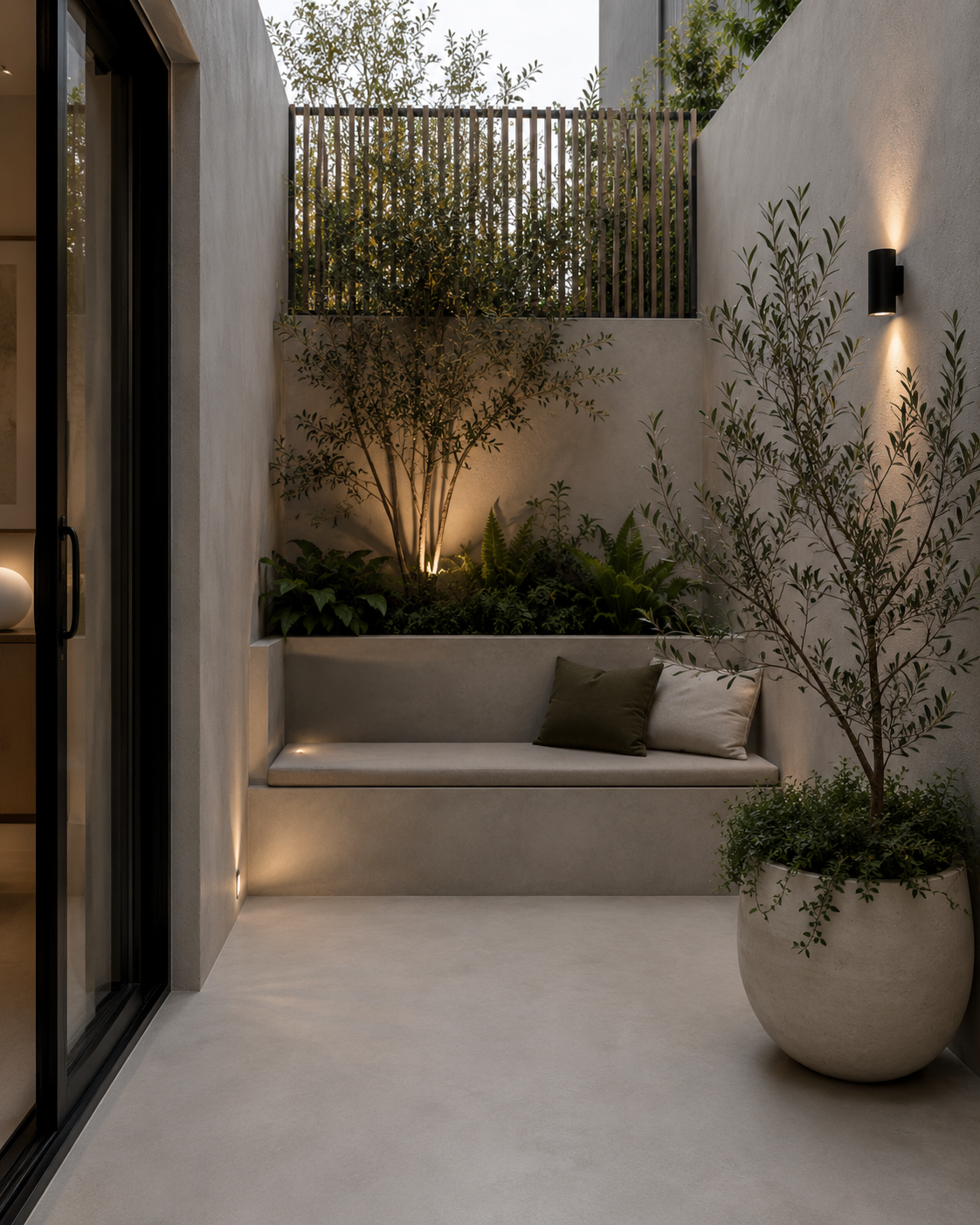
Freestanding furniture often consumes valuable floor space. If you don’t have much of that to work with, built-in benches along retaining walls or boundary fences create permanent seating while keeping the centre of the garden open. They can also double as storage or integrate planter boxes for added greenery.
3. Think Vertically
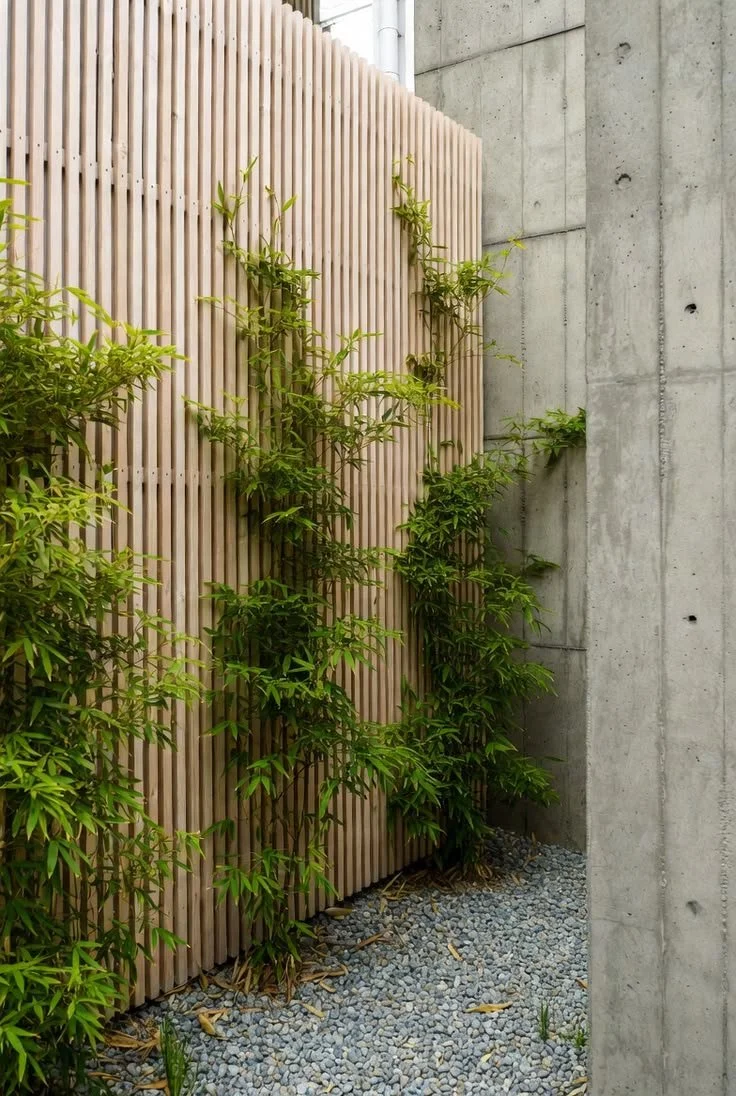
When floor space is limited, use your walls. Vertical gardens, climbing plants, and architectural screening all draw the eye upwards, making the space feel taller and more immersive. Even a simple climbing vine can soften hard surfaces and create a lush atmosphere without needing to plant anything in the ground.
A screen planted with climbing vine is also an excellent way to introduce greenery to a balcony without cluttering it, and serves a dual purpose in providing privacy from neighbouring properties.
4. Blur the Boundary Between Indoors and Outdoors
One of the biggest trends in contemporary architecture is creating a seamless transition between inside and outside, especially if the exterior spaces are small. Using similar colours, materials and finishes across both spaces helps extend the perceived size of the home.
For example, continuing the same microcement finish from an internal living area onto an adjoining alfresco creates a calm, cohesive flow that's difficult to achieve with traditional paving.
5. Layer Lighting Instead of Relying on One Fixture
Outdoor lighting is often overlooked, especially in DIY renovations. But your lighting scheme can be instrumental in accentuating the feeling of space, especially if you plan on using your outdoor area for entertaining after dark. Consider combining multiple softer sources such as:
Wall lights
Step lights
Uplighting beneath plants
LED strip lighting beneath seating
Layered lighting adds depth, enhances features, and ultimately helps the space feel multi-dimensional long after sunset.
6. Add Timber Battens as a Privacy Screen
Privacy doesn't have to come at the expense of space or light. Vertical timber battens are a popular alternative to solid fencing because they create a sense of enclosure while still allowing light and airflow to filter through. They also tend to take up less space, as well as introduce the warmth and texture of natural woodgrain to soften hard landscaping materials like concrete, stone or metal.
Timber battens also work particularly well as a backdrop for climbing plants, helping transform a plain boundary fence into an architectural feature.
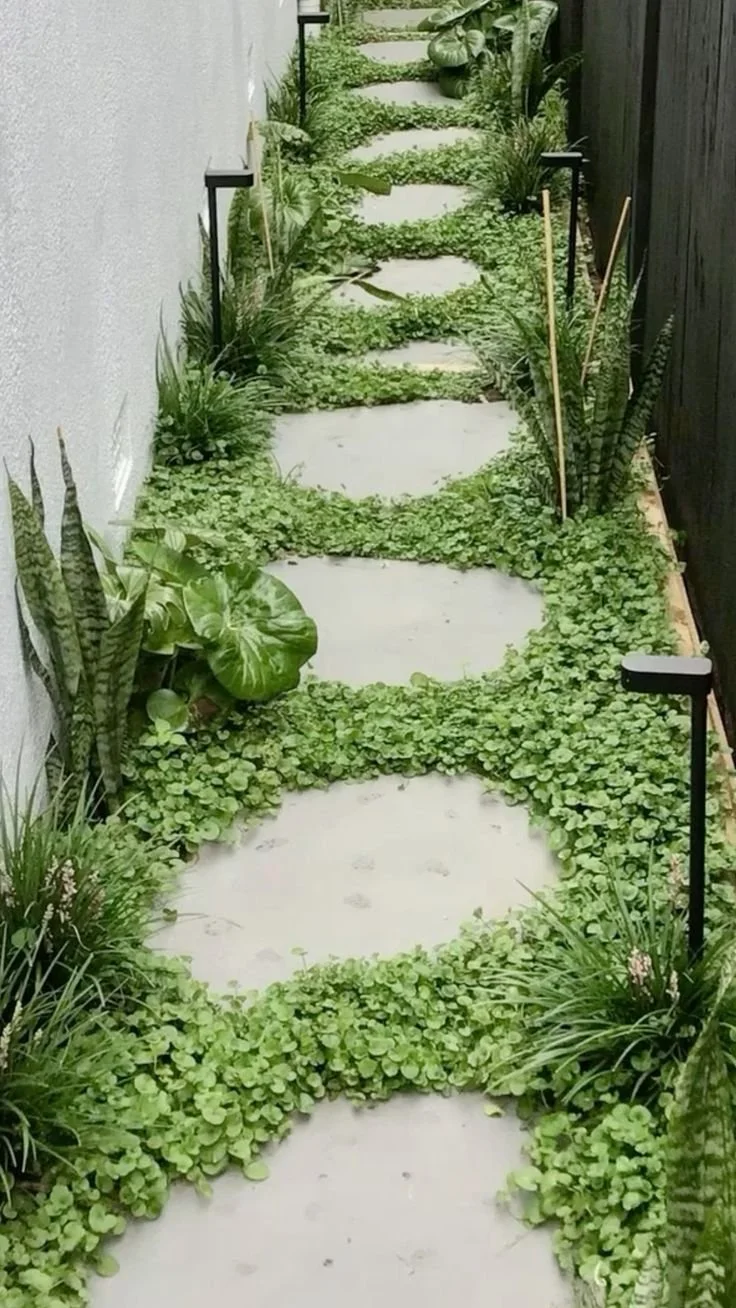
7. Use Oversized Stepping Stones with Greenery Joints
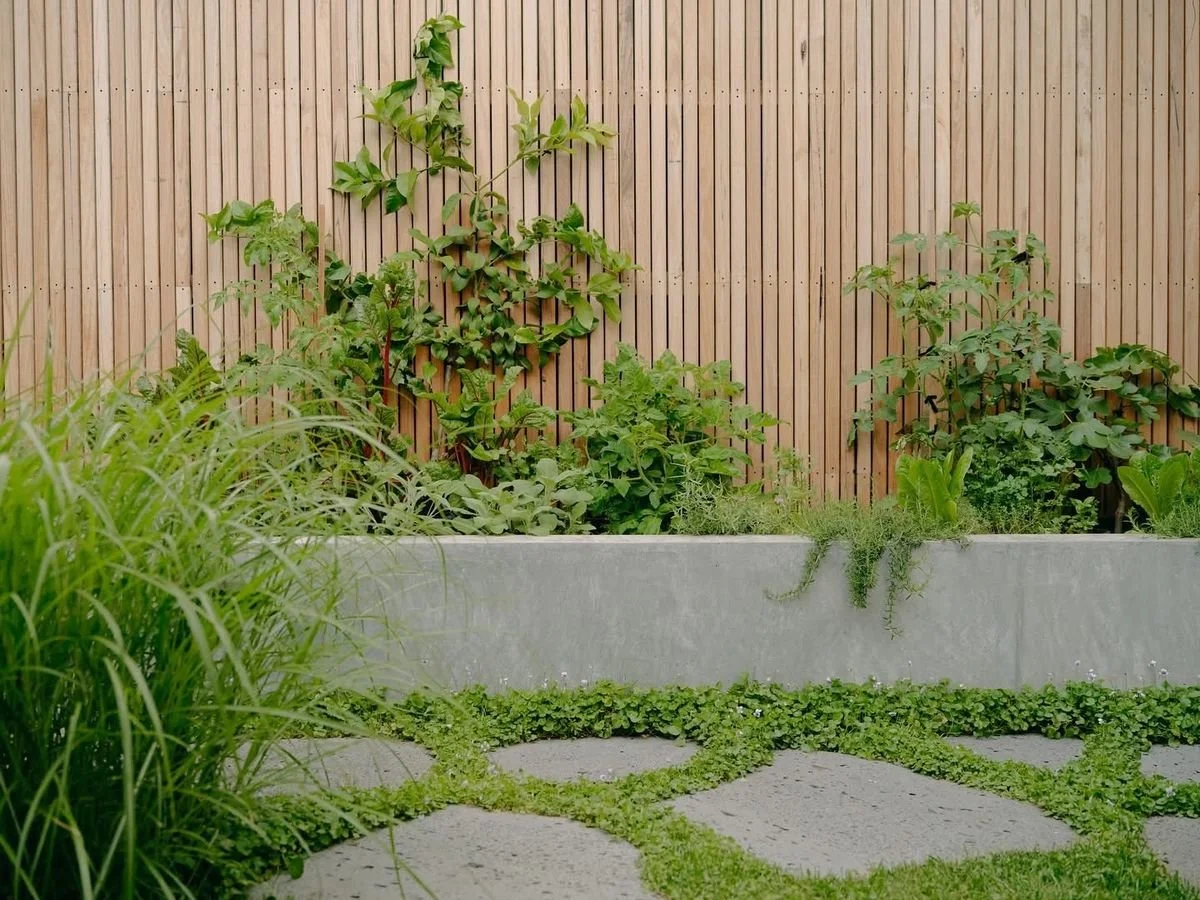
Instead of paving an entire courtyard or narrow exterior space, consider creating a pathway with oversized stepping stones. Compared to smaller pavers, larger-format stones reduce visual clutter and give courtyards and garden paths a more contemporary feel. Leaving generous gaps between each stone also introduces texture and contrast.
Fill the joints with low-growing groundcovers such as native grasses, dichondra or creeping thyme. The result is a pathway that feels integrated with the landscape rather than dominating it, while keeping narrow walkways functional.
Read Next: How Microcement Achieves Concrete Look Outdoor Flooring