
Five Outdoor Flooring Trends Shaping Contemporary Exterior Design
Outdoor flooring has traditionally been a fairly predictable choice between concrete, decking and pavers. But there's more to consider beneath our feet, especially as outdoor spaces become increasingly integrated into the architecture of the home.
We're seeing a renewed appreciation for materials with character. Irregular stone formations, weathered brick, darkened timber and hand-applied finishes are bringing texture and individuality to exterior spaces. Some draw on centuries-old building traditions, while others offer a contemporary interpretation of familiar materials.
Whether you're designing a small courtyard or renovating an existing patio, these are five outdoor flooring ideas we think you should know about.
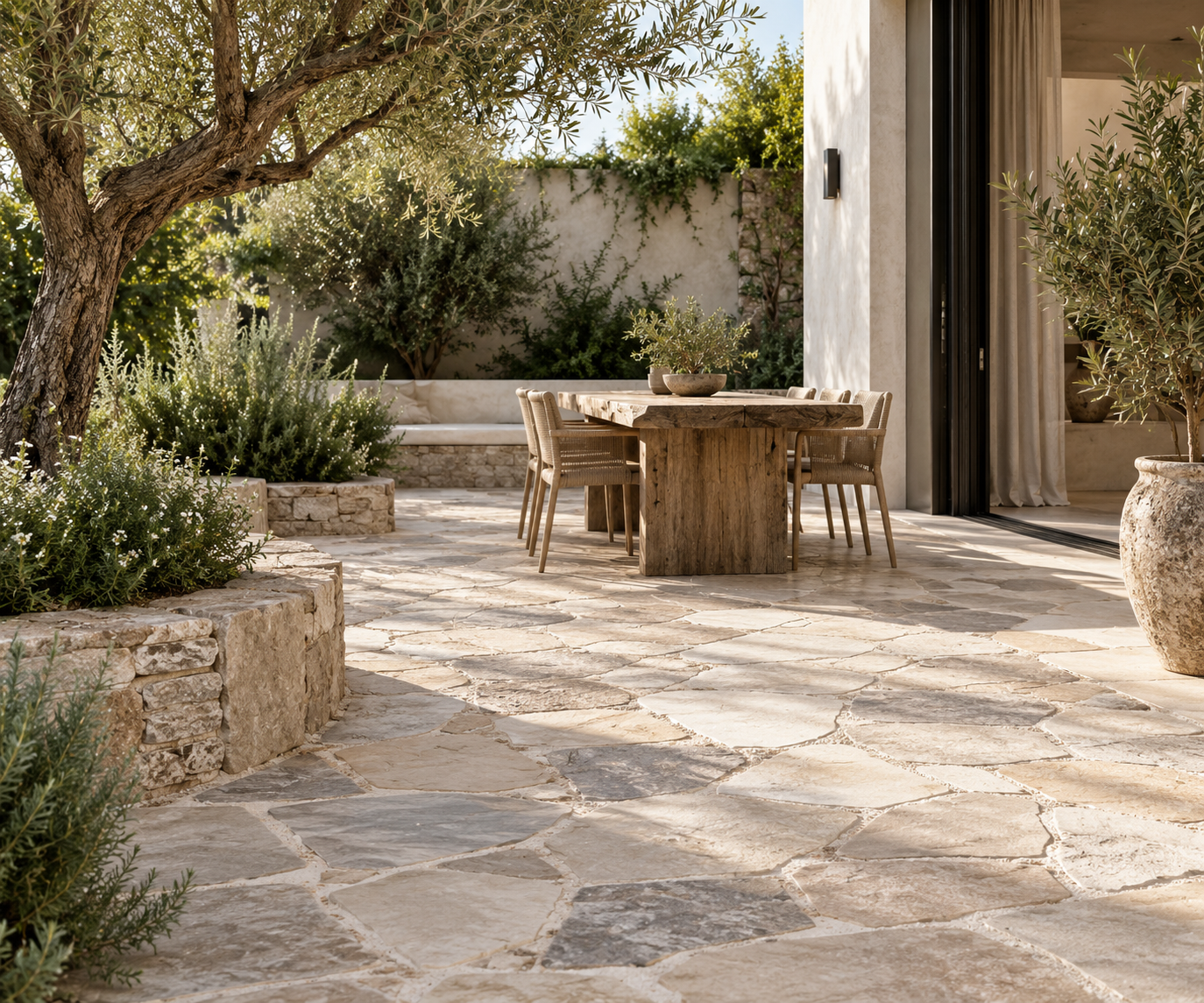
1. Crazy Paving: Embracing Irregularity
Crazy paving is one of the most popular paver applications in contemporary landscape design, but its origins reach back centuries. Irregular stonework can be traced to ancient Roman construction, while the crazy paving we recognise today became popular in 19th century British gardens before finding its way into Australian residential architecture.
The irregular stone shapes and varied joint lines create a more organic appearance than conventional rectangular pavers, introducing movement and geometry to outdoor spaces. The beauty of crazy paving lies in its individuality, with no two layouts exactly alike.
If you really want to integrate the flooring into the surrounding landscape, you can even fill the joints with moss, ferns, or other groundcover plants.
2. Microcement: The Appeal of Seamless Outdoor Flooring
There's something particularly striking about seamless flooring, especially outdoors, where the surrounding architecture and landscape provide so much of the visual interest.
Microcement achieves this continuity without sacrificing character. Applied by hand, the finish features subtle tonal movement and trowel variations that give the surface depth and individuality. The result is minimalist without appearing flat or uniform.
It’s becoming a popular alternative to traditional concrete flooring because it achieves a similar monolithic, architectural aesthetic with significantly less build-up (only a few millimetres thick), with the ability to be applied onto suitably prepared existing substrates without demolition, including old pavers or concrete.
At Alt Surfaces, we work with X-Bond Microcement — a polymer-modified microcement system that’s UV-stable, weatherproof, and applied at only 2-3mm over existing substrates. Learn more in our Exterior Microcement Information Hub.

3. Cobblestone: Old-World Character in Contemporary Landscapes
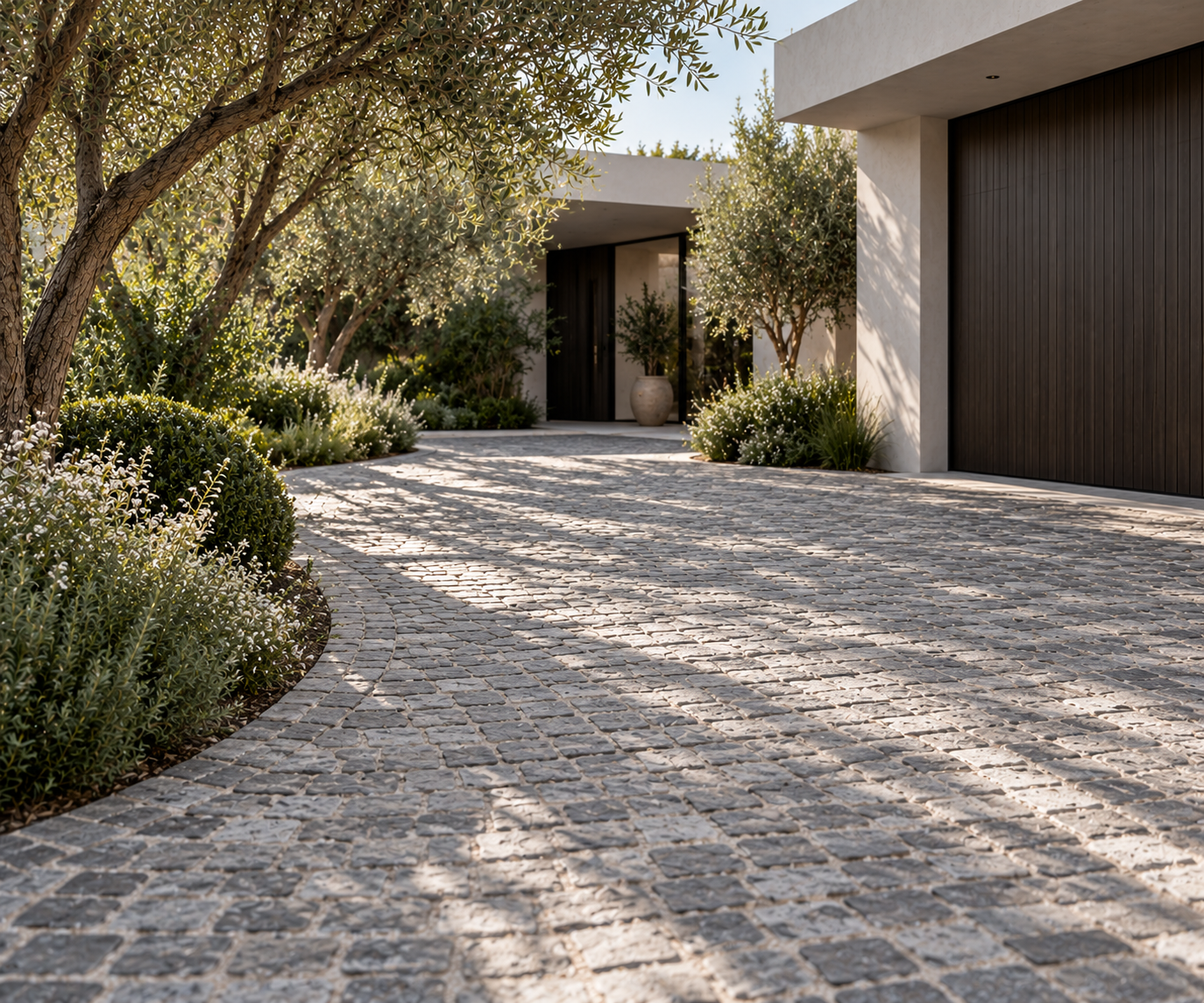
Cobblestone paving has an unmistakable association with historic European streets, but its distinctive texture is finding a place in contemporary residential landscaping.
Unlike large-format pavers, cobblestones create a surface defined by repetition. Traditional fan and arched laying patterns introduce a sense of movement, while straight-set arrangements can give cobblestones a more contemporary character. Material choice also changes the effect considerably, from light beige to classic warm granite tones or darker basalt.
Cobblestones are particularly interesting for driveways, entranceways and garden paths. Their irregularity is part of their appeal, although the stone profile, joint treatment and installation need careful consideration for comfortable walking and accessibility.
4. Quartz Carpet: Natural Stone in a Different Form
Quartz Carpet offers an alternative approach to traditional exposed aggregate flooring. It features natural river stones combined with a specialist resin binder to create an ultra-strong surface.
The result has a distinctly granular appearance, with subtle colour variation created by the individual stones.
It's an interesting choice for outdoor flooring because it combines the character of natural stone with the visual consistency of a continuous surface, and outstanding strength. Our system also offers a permeable variation suited to exterior flooring applications, made for better drainage.

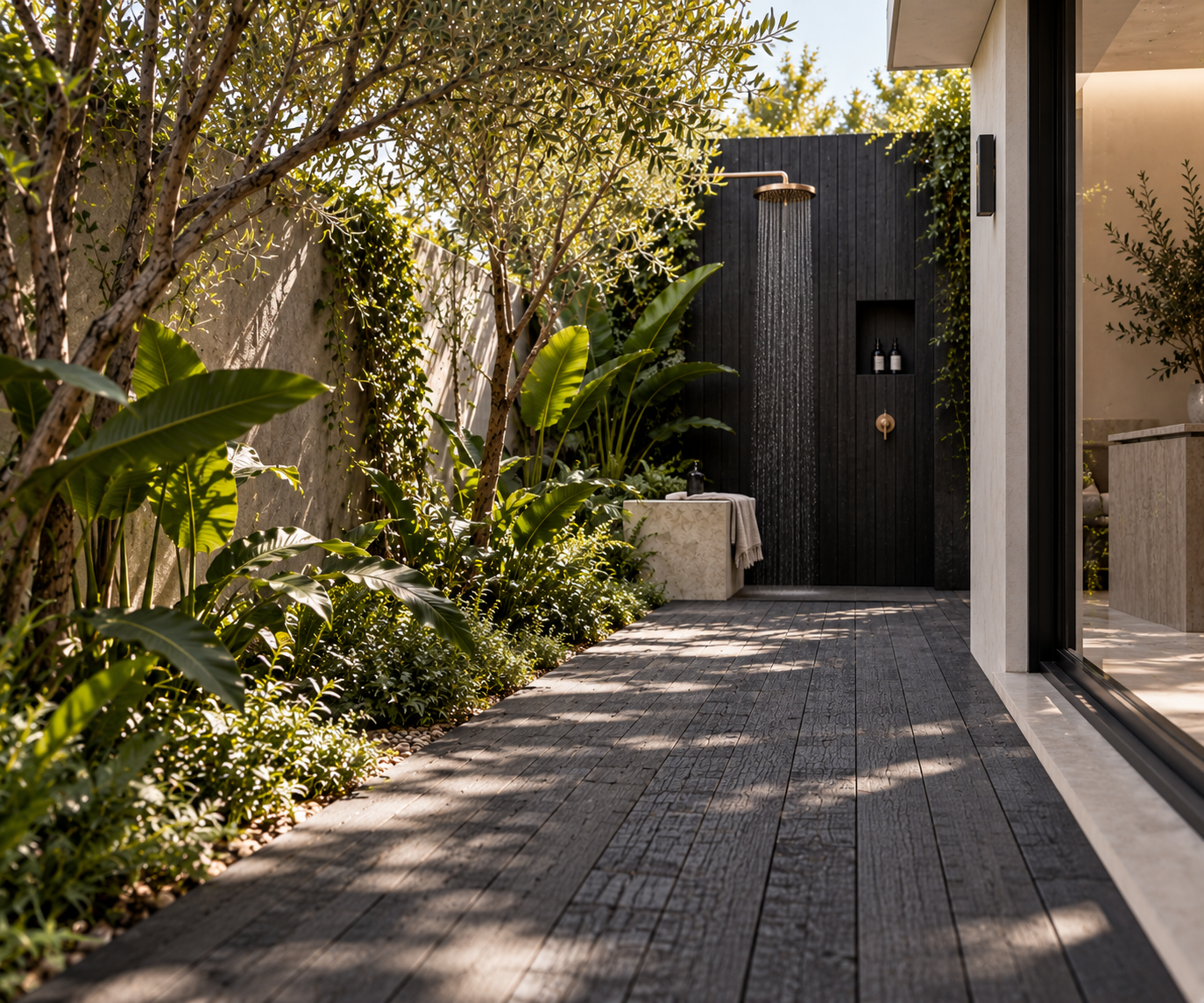
5. Charred Timber: A Darker Approach to Decking
Timber decking is hardly a new concept, but charred timber introduces an entirely different aesthetic to the familiar material.
Inspired by the Japanese preservation technique yakisugi, in which the surface of timber is carefully charred, the finish can range from deep charcoal tones to an almost blackened appearance with pronounced grain and texture.
For contemporary exterior design, the appeal is a more elegant take on organic aesthetics. Dark timber decking can also create a striking foundation against pale masonry, concrete, natural stone and surrounding greenery. It offers a more unique alternative to the warm honey and brown tones commonly associated with outdoor timber.
Not every charred timber product is suitable for horizontal decking or regular foot traffic, so it's important to specify a decking-grade product with an appropriate finish and maintenance requirements.
Choosing Outdoor Flooring Beyond Aesthetics
The most successful outdoor flooring choices balance the intended design aesthetic with the conditions of the space.
Exposure to weather, direct sunlight, and foot traffic can influence which materials and installation systems are appropriate. Slip resistance, drainage, maintenance and the condition of the existing substrate should also inform the specification.
This article contains some of our products seems; if they seem like the right fit for you, feel free to contact us or visit our showroom to learn more.